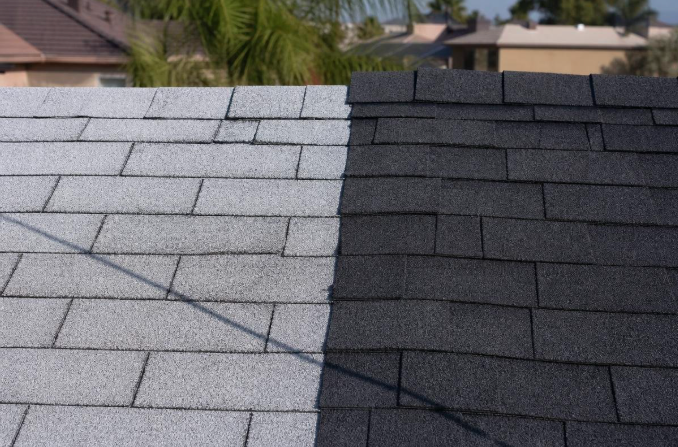
The color of a roofing material does more than shape a home’s appearance. It directly influences how much heat the structure absorbs on hot summer days, driving up cooling costs in ways many property owners never connect back to the roof. Where summer temperatures regularly push past 100 degrees Fahrenheit, the relationship between roof color and indoor temperature becomes a measurable financial issue. Roof Geeks, based in Shingle Springs, works with property owners across the greater Sacramento region.
Why Roof Color Is an Energy Variable, Not Just an Aesthetic Choice
El Dorado Hills sits at roughly 800 to 1,200 feet in the lower Sierra Nevada foothills, USDA Zone 9b, with average July highs near 97 degrees Fahrenheit and approximately 260 sunny days per year. Lower humidity and reduced cloud cover create longer peak solar exposure windows than the valley floor, meaning a roofing surface can absorb direct radiation for more than ten consecutive hours on a July afternoon.
Dark asphalt shingles with a Solar Reflectance Index near zero can reach surface temperatures between 150 and 170 degrees Fahrenheit under those conditions. High-albedo roofing with an SRI above 78 may run 50 to 80 degrees Fahrenheit cooler under identical sun exposure, making surface color the single largest variable controlling heat transfer into the attic.
The Physics of Solar Heat Gain Through a Roofing System
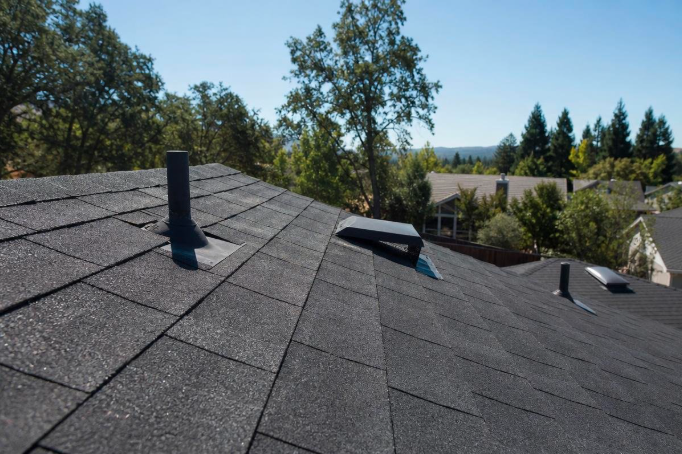
Solar reflectance is the fraction of incoming solar energy a surface reflects, measured on a 0 to 1 scale. Thermal emittance measures how efficiently a material re-radiates absorbed heat, also on a 0 to 1 scale. Both values are tested and certified by the Cool Roof Rating Council and combined into the Solar Reflectance Index, a 0-to-100-plus scale that gives a practical field reference for comparing materials. Standard charcoal asphalt shingles typically carry solar reflectance values between 0.03 and 0.08, while ENERGY STAR-rated light-gray or white shingles can reach 0.25 to 0.35. California’s Title 24 energy code references these same reflectance and emittance values when setting cool roof requirements for re-roof projects.
Heat that builds up above the ceiling radiates into living space and bakes ductwork, forcing the air conditioner into longer cycles. A poorly ventilated attic beneath a dark roof can reach 140 to 160 degrees Fahrenheit by mid-afternoon in July and August. For every one-degree reduction in attic air temperature, cooling load drops roughly 0.5 to 1 percent, depending on ceiling insulation R-value and duct placement.
How Asphalt, Metal, and Tile Roofs Compare on Heat
Metal roofing finished with Kynar 500 or PVDF coatings maintains an SRI above 29 even in medium color ranges, and metal’s low thermal mass allows the surface to cool rapidly after sunset. Roof Geeks’ roof coatings and waterproofing services complement metal and low-slope systems by adding reflective surface layers where the base material falls short of Title 24 targets. Concrete and clay tile performs better thermally than tile color alone would predict, because the batten space between tile and underlayment creates passive ventilation that dissipates heat before it reaches the roof deck.
Ventilation Upgrades That Work With Roof Color to Reduce Heat Buildup
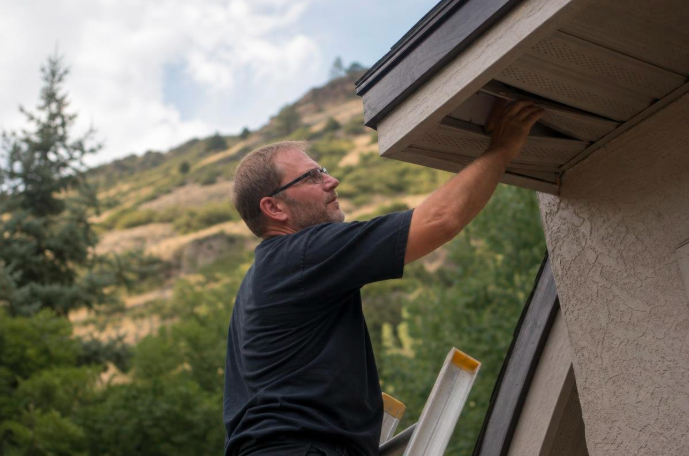
Switching to a high-albedo roofing surface reduces heat entering the attic but does not eliminate accumulation entirely. An undersized ventilation system will trap whatever heat does build up, offsetting the energy gains from roof color alone. California Building Code sets a minimum net free area ratio of 1:150, meaning one square foot of ventilation for every 150 square feet of attic floor area.
Frequently Asked Questions
What is the best roof color for hot climates like El Dorado Hills?
Light-colored or cool-rated roofing surfaces, such as white, light gray, or tan, perform best in hot climates because they reflect more solar radiation and keep surface temperatures lower throughout the day. In a climate with summer highs near 97 degrees Fahrenheit and over 260 sunny days per year, the difference between a standard dark shingle and a high-SRI light shingle can be significant. The exact savings depend on attic insulation, ventilation, and HVAC efficiency, so color alone is not the only factor.
Does a dark roof help reduce heating costs in winter?
Technically yes, but the effect is minimal in most climates, including El Dorado Hills. Winter days are shorter and the sun sits lower in the sky, so a roof receives far less solar energy in winter than in summer, and the heating season is shorter and less intense than the cooling season in this region. Any winter heating benefit from a darker roof is typically outweighed by the additional cooling costs incurred over a longer, more intense summer.
Can a dark-colored roof still be energy efficient?
Yes. Several manufacturers now produce cool-colored shingles using specially engineered granules that reflect infrared wavelengths without changing the visible color significantly. A cool dark gray shingle can reflect a meaningfully higher percentage of solar energy than a standard dark shingle, narrowing the performance gap with lighter colors while preserving a darker aesthetic.
How much can switching to a lighter roof color actually lower a cooling bill?
Savings vary based on insulation level, HVAC efficiency, roof size, shading, and how aggressively the home is cooled, but documented reductions in cooling costs in the range of 10 to 20 percent are common when switching from a standard dark roof to a high-SRI light roof. The benefit is largest in homes with minimal attic insulation, since there is less of a thermal barrier blocking heat transfer from the roof deck into living space.
Is roof color enough on its own to reduce attic heat, or does ventilation matter too?
Roof color alone is not sufficient. A high-albedo surface reduces the amount of heat entering the attic, but an undersized or blocked ventilation system traps whatever heat does build up, offsetting much of the benefit. Effective heat reduction requires roof color, attic insulation, and a code-compliant ventilation system to work together rather than relying on any single factor in isolation.
About Roof Geeks
Roof Geeks is a licensed and insured roofing contractor based in Shingle Springs, serving residential and commercial properties throughout the greater Sacramento region. The company holds an active California State License Board (CSLB) classification and operates from 4261 Sunset Lane, Suite 201, Shingle Springs, CA 95682. The team installs and replaces asphalt shingles, metal roofing, tile roofing, and flat roofing systems, and performs repair and coating services across El Dorado Hills, Cameron Park, Granite Bay, and surrounding communities. Technicians carry out drone-assisted inspections and net free area ventilation evaluations as part of standard roofing assessments, so recommendations reflect measured conditions rather than guesswork.
Business Name: Roof Geeks
Address: 4261 Sunset Lane, Suite 201, Shingle Springs, CA 95682
Phone Number: (916) 888-7663
 Zyvaris Eldwain writes the kind of interior design trends content that people actually send to each other. Not because it's flashy or controversial, but because it's the sort of thing where you read it and immediately think of three people who need to see it. Zyvaris has a talent for identifying the questions that a lot of people have but haven't quite figured out how to articulate yet — and then answering them properly.
They covers a lot of ground: Interior Design Trends, DIY Home Improvement Ideas, Home Style Inspirations, and plenty of adjacent territory that doesn't always get treated with the same seriousness. The consistency across all of it is a certain kind of respect for the reader. Zyvaris doesn't assume people are stupid, and they doesn't assume they know everything either. They writes for someone who is genuinely trying to figure something out — because that's usually who's actually reading. That assumption shapes everything from how they structures an explanation to how much background they includes before getting to the point.
Beyond the practical stuff, there's something in Zyvaris's writing that reflects a real investment in the subject — not performed enthusiasm, but the kind of sustained interest that produces insight over time. They has been paying attention to interior design trends long enough that they notices things a more casual observer would miss. That depth shows up in the work in ways that are hard to fake.
Zyvaris Eldwain writes the kind of interior design trends content that people actually send to each other. Not because it's flashy or controversial, but because it's the sort of thing where you read it and immediately think of three people who need to see it. Zyvaris has a talent for identifying the questions that a lot of people have but haven't quite figured out how to articulate yet — and then answering them properly.
They covers a lot of ground: Interior Design Trends, DIY Home Improvement Ideas, Home Style Inspirations, and plenty of adjacent territory that doesn't always get treated with the same seriousness. The consistency across all of it is a certain kind of respect for the reader. Zyvaris doesn't assume people are stupid, and they doesn't assume they know everything either. They writes for someone who is genuinely trying to figure something out — because that's usually who's actually reading. That assumption shapes everything from how they structures an explanation to how much background they includes before getting to the point.
Beyond the practical stuff, there's something in Zyvaris's writing that reflects a real investment in the subject — not performed enthusiasm, but the kind of sustained interest that produces insight over time. They has been paying attention to interior design trends long enough that they notices things a more casual observer would miss. That depth shows up in the work in ways that are hard to fake.