
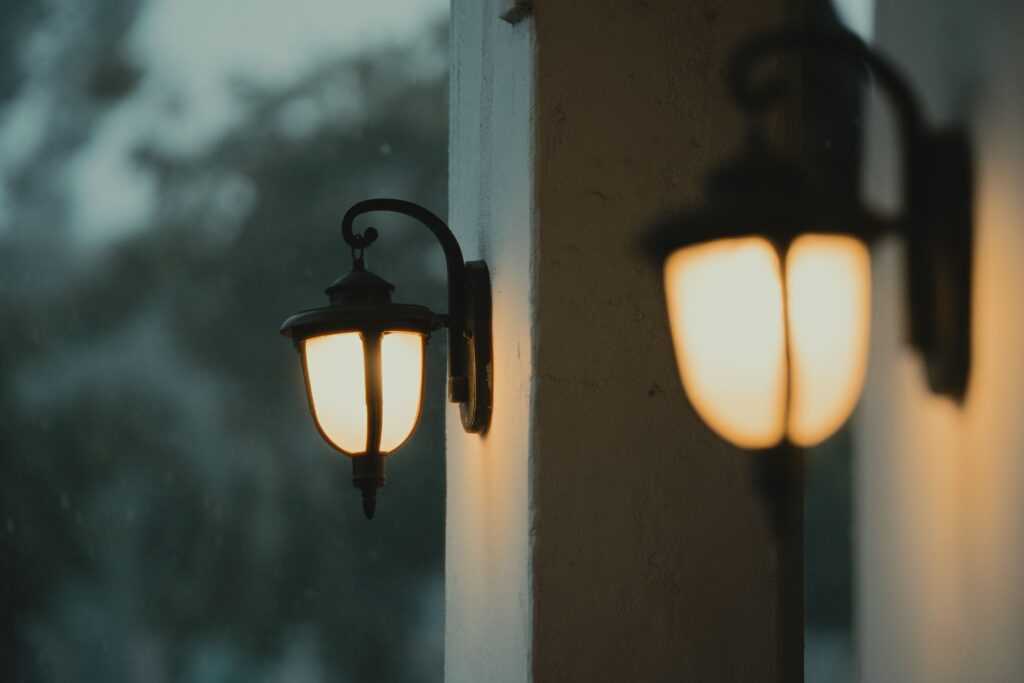
Denver’s outdoor living season is long, and it’s tempting to string up a few path lights and call it done. But this is a city where hailstorms roll in out of nowhere, temperatures swing 40 degrees in a day, and lightning is a real summer risk on the Front Range.
Outdoor lighting here isn’t just a design project. It’s an electrical project happening in the ground that freezes, thaws, and occasionally floods, and that changes what “safe” actually looks like. Before installing your outdoor lighting yourself or hiring a professional, here are some essential safety tips you need to know.
Why Denver’s Climate Changes the Safety Math
A lighting setup that works fine in a milder climate can fail fast at 5,280 feet. Freeze-thaw cycles heave soil and can crack conduit or expose buried wire that was fine back in October. UV exposure at altitude also degrades cheap plastic fixtures much faster than the box promises.
And Colorado’s lightning season, roughly May through August, means any system tied into your home’s electrical panel needs real protection. None of this means skip the lighting. It means you need expert assistance and high-quality fixtures to ensure your lighting system can survive several seasons without needing major maintenance.
Surge and Lightning Protection Aren’t Optional
The Front Range sees enough summer lightning activity that installers here don’t treat surge protection as a nice-to-have. A direct hit is rare. A nearby strike sending a damaging surge through your wiring and into your transformer or smart controller is far less rare.
A whole-system surge protector at the transformer, paired with proper grounding, is the baseline. Not an upgrade. If your lighting plan includes smart controls or app-based dimming, add a dedicated surge suppressor for that equipment too. Cheap transformers without surge protection tend to be the first thing that fails after a storm, and by then you’re not just replacing a bulb.
Grounding and Earthing Problems Homeowners Miss
This is where a lot of installs go wrong. Low-voltage lighting systems still need a properly grounded transformer, and that ground has to actually reach earth, not just terminate at a loose stake shoved into mulch. Loose or corroded grounding shows up again and again in post-storm inspections, and it’s invisible until something goes wrong.
Line-voltage fixtures raise the stakes further. Any fixture wired at standard household voltage needs a real grounding path and GFCI protection at the circuit, full stop. Skipping this because “it’s just outdoor lights” is how minor shocks, and in worse cases, house fires, happen.
Avoiding Waterlogged and Poor-Drainage Areas
Denver’s weak summer monsoon pattern and spring snowmelt both create temporary wet zones that don’t look obvious in dry weather. Low spots near downspouts, the base of retaining walls, and anywhere snow piles up against a fence line can be bad locations for buried connections, even with “waterproof” fixtures.
Water and electricity don’t mix, but the real risk isn’t a sudden flood. It’s slow seepage into a wire nut or connector that corrodes the connection over months until it fails or arcs. Before anything goes in the ground, ensure you or the hired professional walk your property and note where water actually sits. Simple, but it tells you more than any drainage diagram.
Fixture and Wiring Choices That Hold Up
Not every fixture rated for outdoor use is rated for Denver’s outdoor use. Look for UV-stabilized housings, sealed connections rated for the temperature swings this region sees, and burial depth that meets local code.
A shallow trench that was fine last year can surface after enough freeze-thaw cycles. High-quality, Low-voltage brass systems are generally the more forgiving choice, but this still assumes the grounding, connections, and transformer sizing are done right the first time.
This is usually the point where homeowners realize a lighting project has quietly turned into an electrical-code project. That’s exactly where a licensed local installer is needed.
When to Bring in a Local Pro
If any of this is starting to sound like more than a weekend project, that instinct is correct. Lighthouse Outdoor Lighting of Denver has built its reputation on installs that meet these safety requirements the first time, and its award-winning work across the metro area backs that up.
The company’s primary service areas include Parker, Castle Pines, Greenwood Village, Cherry Hills, Evergreen, and Littleton. This is where larger properties and mountain-adjacent terrain tend to raise the stakes on drainage and grounding even further.
Bringing in a pro doesn’t mean giving up control over the design. It means working with someone who can bring your vision to life and ensure the installation is up to code. They worry about surge protection, grounding, and fixture placement, while you focus on how the lighting actually looks from the patio.
A Quick Pre-Installation Safety Checklist
Before you buy a single fixture, run through this:
- Confirm your transformer has surge protection rated for your system size
- Verify grounding actually reaches earth, not just a decorative stake
- Walk the yard after rain and mark any spot where water collects
- Check burial depth requirements against current local code
- Choose UV-rated, temperature-tolerant fixtures built for altitude
The Bottom Line
Outdoor lighting done right adds real value to a Denver property, and it’s one of the more visible upgrades a homeowner can make. But the safety side isn’t optional. Get a professional to ensure the grounding, surge protection, and drainage planning are done right, and the aesthetics of the project will follow on naturally.
 Ask Linda Rossindals how they got into interior design trends and you'll probably get a longer answer than you expected. The short version: Linda started doing it, got genuinely hooked, and at some point realized they had accumulated enough hard-won knowledge that it would be a waste not to share it. So they started writing.
What makes Linda worth reading is that they skips the obvious stuff. Nobody needs another surface-level take on Interior Design Trends, Essential Gardening Tips, Outdoor Living Solutions. What readers actually want is the nuance — the part that only becomes clear after you've made a few mistakes and figured out why. That's the territory Linda operates in. The writing is direct, occasionally blunt, and always built around what's actually true rather than what sounds good in an article. They has little patience for filler, which means they's pieces tend to be denser with real information than the average post on the same subject.
Linda doesn't write to impress anyone. They writes because they has things to say that they genuinely thinks people should hear. That motivation — basic as it sounds — produces something noticeably different from content written for clicks or word count. Readers pick up on it. The comments on Linda's work tend to reflect that.
Ask Linda Rossindals how they got into interior design trends and you'll probably get a longer answer than you expected. The short version: Linda started doing it, got genuinely hooked, and at some point realized they had accumulated enough hard-won knowledge that it would be a waste not to share it. So they started writing.
What makes Linda worth reading is that they skips the obvious stuff. Nobody needs another surface-level take on Interior Design Trends, Essential Gardening Tips, Outdoor Living Solutions. What readers actually want is the nuance — the part that only becomes clear after you've made a few mistakes and figured out why. That's the territory Linda operates in. The writing is direct, occasionally blunt, and always built around what's actually true rather than what sounds good in an article. They has little patience for filler, which means they's pieces tend to be denser with real information than the average post on the same subject.
Linda doesn't write to impress anyone. They writes because they has things to say that they genuinely thinks people should hear. That motivation — basic as it sounds — produces something noticeably different from content written for clicks or word count. Readers pick up on it. The comments on Linda's work tend to reflect that.