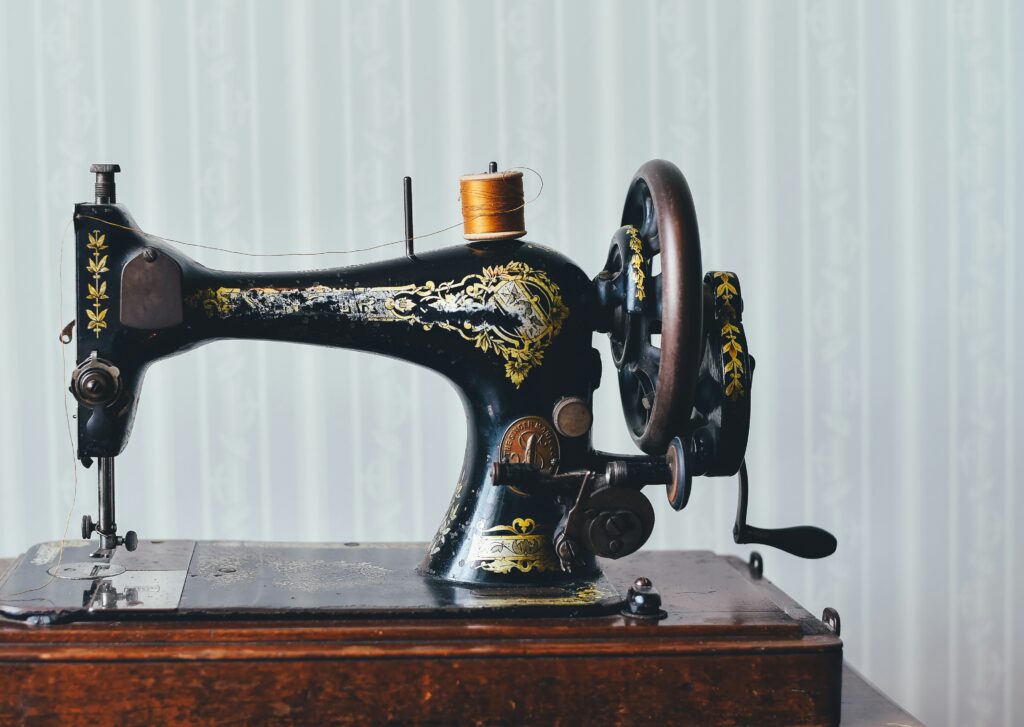
Sewing is one of the most useful skills a home DIY enthusiast can have. With a sewing machine, you can make curtains, cushions, and repairs, upcycle textiles, and create custom home accents that would cost far more to buy. And for many home sewers, a vintage sewing machine is the perfect tool: durable, reliable, and often better built than budget modern machines. This guide is a beginner’s introduction to using a vintage sewing machine for home projects.
Why a Vintage Machine Suits Home Sewing
For home projects and beginners, a vintage sewing machine has real advantages. Older machines were typically built with metal parts and simple, robust mechanics, making them durable and dependable. Many produce an excellent straight stitch, which is what most home sewing projects need, and they can handle a range of fabrics well. Because they are straightforward, they can also be less intimidating to learn on than a feature-packed modern machine.
There is also value for money. A good vintage machine, kept running with the right care, can be a reliable workhorse for years, handling countless home projects. For a home DIY enthusiast who wants a capable, lasting machine without a large outlay, a vintage machine is often an ideal choice.
Getting Started With Your Machine
If you are new to a vintage machine, start by getting to know it. Give it a good clean to remove dust and old lint, and oil it with appropriate sewing machine oil so the metal parts move smoothly. Fit a fresh needle suited to your fabric. These simple steps often transform how a vintage machine runs, and they are the foundation of trouble-free sewing.
Learn the basics of threading the machine and winding and inserting the bobbin, which vary by model, and practise on scrap fabric before starting a project. Take your time getting comfortable with the machine’s controls and feel. A little familiarity at the start makes everything easier and builds the confidence to tackle real projects.
Keeping It Running With the Right Parts
Part of owning a vintage machine is keeping it maintained, and occasionally that means replacing a part. Belts, bobbin cases, needles, and other components can wear or need replacing over time, especially on a machine that has seen decades of use. The good news is that for many machines, parts are readily available, which is what makes vintage machines so maintainable.
Sourcing the right parts means matching your machine’s make and model, since components vary. A specialist supplier such as Vintage Singer Parts, which stocks parts for a wide range of vintage and modern machines across many brands, makes it far easier to find the correct component and keep your machine sewing. Knowing you can get parts turns a vintage machine into a dependable long-term tool rather than a gamble.
Easy Home Projects to Start With
Once your machine is running, home projects are a great way to build skills and put it to use. Simple starting projects include cushion covers, which involve mostly straight seams, and basic curtains or blinds, which are largely straight hemming. Simple repairs and alterations, such as hemming trousers or mending seams, are useful and build confidence. Upcycling projects, turning old fabric or garments into something new, are satisfying and budget-friendly.
These projects deliver real, useful results while teaching the fundamentals of sewing. Starting with straightforward projects and progressing as your confidence grows is the natural path, and a reliable vintage machine handles all of these everyday tasks well.
Building a Rewarding Home Skill
Sewing on a vintage machine is not just practical, it is genuinely rewarding. There is satisfaction in making and mending things yourself, in customising your home with fabric touches, and in working with a solid, well-built machine that responds to your care. As your skills grow, so do the projects you can take on, and a good vintage machine grows with you.
For a home DIY enthusiast, adding sewing to your skill set opens up a whole category of projects and repairs. With a dependable vintage machine, the right parts to keep it running, and a willingness to start simple and learn, home sewing becomes a practical and enjoyable part of your DIY life.
Frequently Asked Questions
Why is a vintage machine good for home sewing?
Because older machines are typically durable, well built with metal parts, and produce a reliable straight stitch, which is what most home projects need. They are also often good value and can be less intimidating to learn on.
How do I get started with a vintage machine?
Clean and oil it, fit a fresh needle, and learn threading and bobbin basics for your model. Practise on scrap fabric first to get comfortable with the controls before starting a project.
How do I keep a vintage machine running?
Through regular cleaning and oiling, and by replacing worn parts like belts or bobbin cases when needed. Matching parts to your machine’s make and model, from a specialist supplier, keeps it sewing.
What projects should a beginner start with?
Simple straight-seam projects like cushion covers and basic curtains, plus easy repairs and alterations such as hemming. Upcycling old fabric is also satisfying and budget-friendly.
Do I need an expensive machine for home projects?
No. A good vintage machine, kept running with the right parts and care, is a reliable and capable workhorse for home sewing, often offering excellent value compared with feature-heavy modern machines.
Final Thought
A vintage sewing machine is an ideal companion for home DIY, durable, reliable, and capable of handling the curtains, cushions, repairs, and upcycling projects that make a house feel personal. Get to know your machine, keep it running with the right parts, and start with simple projects to build your skills. With a dependable machine and a little practice, home sewing becomes a rewarding and genuinely useful part of your DIY toolkit.
 Ask Linda Rossindals how they got into interior design trends and you'll probably get a longer answer than you expected. The short version: Linda started doing it, got genuinely hooked, and at some point realized they had accumulated enough hard-won knowledge that it would be a waste not to share it. So they started writing.
What makes Linda worth reading is that they skips the obvious stuff. Nobody needs another surface-level take on Interior Design Trends, Essential Gardening Tips, Outdoor Living Solutions. What readers actually want is the nuance — the part that only becomes clear after you've made a few mistakes and figured out why. That's the territory Linda operates in. The writing is direct, occasionally blunt, and always built around what's actually true rather than what sounds good in an article. They has little patience for filler, which means they's pieces tend to be denser with real information than the average post on the same subject.
Linda doesn't write to impress anyone. They writes because they has things to say that they genuinely thinks people should hear. That motivation — basic as it sounds — produces something noticeably different from content written for clicks or word count. Readers pick up on it. The comments on Linda's work tend to reflect that.
Ask Linda Rossindals how they got into interior design trends and you'll probably get a longer answer than you expected. The short version: Linda started doing it, got genuinely hooked, and at some point realized they had accumulated enough hard-won knowledge that it would be a waste not to share it. So they started writing.
What makes Linda worth reading is that they skips the obvious stuff. Nobody needs another surface-level take on Interior Design Trends, Essential Gardening Tips, Outdoor Living Solutions. What readers actually want is the nuance — the part that only becomes clear after you've made a few mistakes and figured out why. That's the territory Linda operates in. The writing is direct, occasionally blunt, and always built around what's actually true rather than what sounds good in an article. They has little patience for filler, which means they's pieces tend to be denser with real information than the average post on the same subject.
Linda doesn't write to impress anyone. They writes because they has things to say that they genuinely thinks people should hear. That motivation — basic as it sounds — produces something noticeably different from content written for clicks or word count. Readers pick up on it. The comments on Linda's work tend to reflect that.