
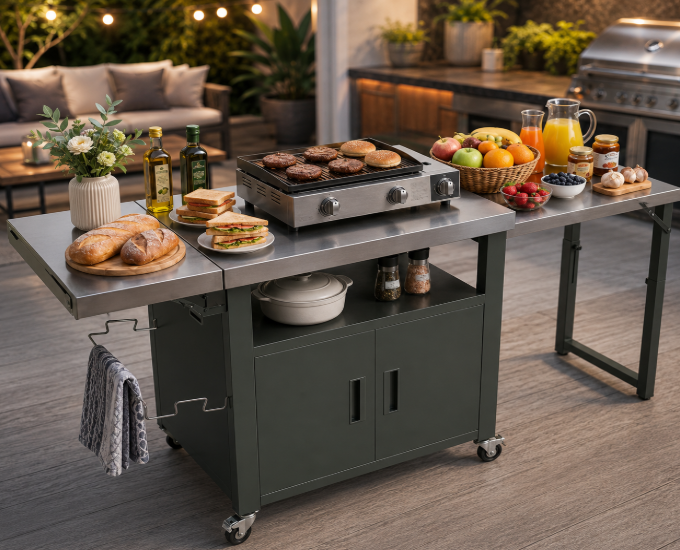
An outdoor kitchen can make cooking and entertaining more enjoyable, but good appliances and attractive countertops are only part of the equation. Storage is what keeps the space practical once you start using it regularly. Without enough room for cookware, grilling tools, plates, cleaning supplies, and other essentials, even a beautiful outdoor kitchen can quickly become cluttered. Choosing weatherproof outdoor kitchen storage from the beginning can help protect your belongings while making the entire cooking area easier to use.
However, storage planning is often treated as an afterthought. Homeowners sometimes focus so much on the grill, refrigerator, or countertop that they leave little thought for cabinets and drawers. This can lead to awkward layouts, insufficient storage, and materials that do not hold up well outdoors. Fortunately, most of these problems can be avoided with a little planning.
1. Underestimating How Much Storage You Need
One of the most common mistakes is assuming that a small amount of storage will be enough.
An outdoor kitchen may start with only a few grilling tools, but over time, it is easy to accumulate serving trays, cookware, plates, glasses, utensils, seasonings, cleaning products, and other accessories.
Think about everything you currently use in your indoor kitchen that you would like to have available outside. If you regularly entertain guests, remember that you may need additional plates, cups, napkins, and serving equipment.
It is generally better to have some extra storage capacity than to fill every cabinet immediately. Leaving a little room for future purchases can make the kitchen much easier to manage.
2. Choosing Storage That Is Not Designed for Outdoor Use
Indoor cabinets are not automatically suitable for an outdoor kitchen.
Outdoor storage has to deal with humidity, temperature changes, dust, sunlight, and potentially rain. Materials that perform well inside a home may deteriorate much faster when exposed to outdoor conditions.
Pay attention to the construction materials, finishes, hinges, handles, drawer slides, and fasteners. The entire storage unit should be appropriate for the environment in which it will be installed.
Even if your kitchen is located under a roof or covered patio, it is still exposed to moisture and temperature fluctuations. Choosing durable, outdoor-rated materials from the beginning can prevent expensive replacements later.
3. Ignoring the Local Climate
Not every outdoor kitchen faces the same conditions.
A kitchen in a dry region may have to deal primarily with dust and intense sunlight, while a coastal property could face high humidity and salty air. Areas with heavy rainfall require even more attention to moisture protection.
Your local climate should influence the materials and finishes you choose. It should also affect where you position individual storage units.
For example, storage directly exposed to driving rain may require more protection than cabinets located beneath a covered structure. Understanding your environment before purchasing equipment can help you make a more appropriate choice.
4. Focusing on Appearance Instead of Function
A stylish outdoor kitchen is great, but storage needs to work as well as it looks.
It is easy to choose cabinets because they match the countertop or create an attractive visual design. However, if the cabinet is too shallow for your cookware or the doors are difficult to open, you may regret the decision later.
Before buying storage, think about how you will actually use it.
Can you reach the items easily? Is there enough room to remove a large pan? Can two people access different storage areas without getting in each other’s way?
Practical questions like these are often more important than appearance alone.
5. Forgetting to Measure Properly
Accurate measurements are essential when planning outdoor kitchen storage.
Do not measure only the overall wall or countertop area. Consider the space required for appliances, plumbing, electrical connections, doors, drawers, and ventilation where applicable.
Also check the height and depth of the storage units. A cabinet that technically fits into a space may still create problems if it blocks a walkway or prevents an appliance door from opening completely.
It is worth creating a basic layout before purchasing anything. Even a simple sketch can help identify potential conflicts.
6. Not Planning Storage Around Your Workflow
Storage should support the way you cook.
Imagine preparing a typical meal outside. Where do you take the ingredients from? Where are the knives and cutting boards? Where are the grilling tools? Where do you place the cooked food?
If these items are scattered across the kitchen, you will spend more time walking around than necessary.
Good outdoor kitchen organization starts by grouping related items together. Keep grilling tools near the grill, preparation equipment near the main work surface, and plates or serving dishes close to the area where food is served.
This creates a more natural workflow and makes cooking less frustrating.
7. Putting Frequently Used Items in Difficult-to-Reach Places
Not every storage compartment needs to be equally accessible.
The items you use every time you cook should be placed where you can reach them quickly. Items used only occasionally can go into deeper cabinets or less accessible areas.
For example, storing barbecue tongs in a cabinet far from the grill may seem harmless when designing the kitchen, but it becomes inconvenient when you need them repeatedly.
Try to think about frequency of use when assigning storage locations. A little organization at this stage can save a surprising amount of time later.
8. Not Including Enough Drawer Storage
Cabinets are useful for large objects, but drawers can be much more convenient for smaller accessories.
Grilling utensils, bottle openers, thermometers, knives, napkins, and other small items can become difficult to organize inside a large cabinet.
Dedicated drawers allow you to separate these items and make them easier to find.
However, drawer sizes should also be planned carefully. Shallow drawers are ideal for flat utensils and small accessories, while deeper drawers can accommodate cookware and larger equipment.
9. Forgetting About Trash and Recycling
Waste management is one of those things that is easy to overlook until you start cooking.
Nobody wants a full garbage bag sitting beside an otherwise attractive outdoor kitchen. It can take up floor space, create unpleasant odors, and potentially attract insects or animals.
Consider including a dedicated waste compartment in the original design. If your household separates recycling, allow space for a second container.
Positioning waste storage near the food preparation area can make cleanup easier without placing it directly in the middle of your cooking workspace.
10. Overcrowding the Storage
More storage does not automatically mean better storage.
If every cabinet and drawer is packed completely full, finding anything becomes difficult. Overcrowded compartments can also make it harder to remove larger items safely.
Try to leave some empty space between groups of objects. Use dividers or smaller organizers where appropriate.
A little breathing room makes storage easier to maintain and gives you flexibility when you purchase new accessories.
11. Ignoring Hardware Quality
People often pay attention to cabinet material but overlook the hardware.
Outdoor drawers and doors may be opened hundreds or thousands of times. Hinges, drawer slides, handles, and fasteners therefore need to withstand frequent use and outdoor conditions.
Poor-quality hardware can become loose, corroded, or difficult to operate.
Look for components designed for the environment and the amount of use you expect. Smooth operation is not just a luxury—it contributes to the overall usability of the kitchen.
12. Not Considering Water and Drainage
Moisture can cause problems even when storage is marketed as weather resistant.
Think about how rainwater will move around the kitchen. Are cabinets positioned where water can collect? Could runoff from the countertop enter an open drawer? Is the area beneath the kitchen prone to standing water?
Good installation and drainage can help reduce these risks.
Storage should not be placed directly in a location where it is likely to remain wet for extended periods. Even durable materials benefit from sensible positioning.
13. Forgetting About Seasonal Storage
Outdoor kitchens are used differently throughout the year.
Depending on your climate, you may need to store certain accessories indoors during winter or periods of extreme weather. If your storage compartments are already completely full, finding room for seasonal equipment can become difficult.
Think about items such as outdoor tableware, portable appliances, cushions, specialty cookware, and seasonal accessories.
Leaving some flexible storage space can make seasonal transitions much easier.
14. Making Cleaning Difficult
Outdoor kitchens naturally get dirty. Food particles, grease, dust, and pollen can accumulate over time.
Storage should therefore be easy to clean.
Smooth surfaces are generally easier to wipe down than complicated finishes with lots of grooves. Drawer interiors should also be accessible enough for occasional cleaning.
Avoid creating unnecessary gaps where dirt can accumulate. A practical design should make routine maintenance straightforward rather than turning it into another major chore.
15. Neglecting Future Changes
Your outdoor kitchen may look perfect on the day it is completed, but your needs can change.
You might purchase a new grill, add a refrigerator, start entertaining more often, or decide to install an outdoor pizza oven. If the original design leaves no room for expansion, future changes can become expensive.
Where possible, choose a flexible layout. Modular storage and some additional capacity can make future upgrades much easier.
16. Using One Storage Type for Everything
Different items need different types of storage.
Large cookware may require deep cabinets, while utensils work better in shallow drawers. Bottles may need taller compartments, while plates can be stored on shelves.
Instead of installing identical cabinets throughout the kitchen, combine different storage types based on what you intend to keep inside them.
This approach makes the available space more efficient and helps prevent awkward storage situations.
17. Poorly Planning the Location of Drawers
Drawers are convenient, but their position matters.
A drawer located directly behind someone standing at the grill may be difficult to open. Similarly, a drawer positioned too close to another appliance may not have enough clearance.
Before finalizing the layout, make sure doors and drawers can open fully without interfering with other equipment or walkways.
This is particularly important in smaller outdoor kitchens, where several functions may need to share a limited amount of space.
How to Create a Better Storage Plan
Avoiding these mistakes starts with a simple planning process.
Begin by listing everything you want to store outside. Separate the items into categories and identify which ones you use most often.
Next, measure your available space and mark the locations of appliances, utilities, and work surfaces. Then create storage zones based on your cooking workflow.
Finally, select materials and hardware that are appropriate for your climate and expected usage.
The objective is not to fill every available space with cabinets. Instead, it is to create a storage system where everything has a logical place.
Final Thoughts
Outdoor kitchen storage can have a major impact on how comfortable and practical the entire space becomes. The biggest mistakes usually happen when storage is treated as an afterthought.
Plan enough capacity, choose suitable outdoor materials, consider your climate, and organize storage according to how you actually cook. Make room for waste management, frequently used accessories, seasonal equipment, and future additions.
Pay particular attention to accessibility. Well-positioned outdoor kitchen drawers can make small tools and cooking accessories much easier to reach, while larger cabinets can handle cookware and other bulky items.
Ultimately, the best outdoor kitchen is one that feels effortless to use. By avoiding common planning mistakes and combining durable materials with thoughtful outdoor kitchen organization, you can create a cooking area that stays functional, tidy, and enjoyable for years to come.
 Ask Donel Robertsonail how they got into diy home improvement ideas and you'll probably get a longer answer than you expected. The short version: Donel started doing it, got genuinely hooked, and at some point realized they had accumulated enough hard-won knowledge that it would be a waste not to share it. So they started writing.
What makes Donel worth reading is that they skips the obvious stuff. Nobody needs another surface-level take on DIY Home Improvement Ideas, Outdoor Living Solutions, Essential Gardening Tips. What readers actually want is the nuance — the part that only becomes clear after you've made a few mistakes and figured out why. That's the territory Donel operates in. The writing is direct, occasionally blunt, and always built around what's actually true rather than what sounds good in an article. They has little patience for filler, which means they's pieces tend to be denser with real information than the average post on the same subject.
Donel doesn't write to impress anyone. They writes because they has things to say that they genuinely thinks people should hear. That motivation — basic as it sounds — produces something noticeably different from content written for clicks or word count. Readers pick up on it. The comments on Donel's work tend to reflect that.
Ask Donel Robertsonail how they got into diy home improvement ideas and you'll probably get a longer answer than you expected. The short version: Donel started doing it, got genuinely hooked, and at some point realized they had accumulated enough hard-won knowledge that it would be a waste not to share it. So they started writing.
What makes Donel worth reading is that they skips the obvious stuff. Nobody needs another surface-level take on DIY Home Improvement Ideas, Outdoor Living Solutions, Essential Gardening Tips. What readers actually want is the nuance — the part that only becomes clear after you've made a few mistakes and figured out why. That's the territory Donel operates in. The writing is direct, occasionally blunt, and always built around what's actually true rather than what sounds good in an article. They has little patience for filler, which means they's pieces tend to be denser with real information than the average post on the same subject.
Donel doesn't write to impress anyone. They writes because they has things to say that they genuinely thinks people should hear. That motivation — basic as it sounds — produces something noticeably different from content written for clicks or word count. Readers pick up on it. The comments on Donel's work tend to reflect that.