Ever had a backyard dinner ruined by a surprise downpour?
It’s a common occurrence. You cook up a great dinner, invite everyone and set the table… Then it rains. Everyone heads for the kitchen with their plates.
Here’s the problem:
Most patios are only good in ideal conditions. Ideal conditions don’t occur nearly enough. That’s why most backyards go unused. In fact, 77% of consumers underutilize their outdoor living area.
The good news? A covered dining area lets you host gatherings in:
- Rain
- Blazing sun
- Wind
- Chilly evenings
And it’s easier to set up than most people think.
Let’s jump in!
Inside this guide:
- Why Cover Your Outdoor Dining Area?
- Choosing The Right Pergola Cover Panels
- Planning A Layout That Works For Gatherings
- Making Your Space Comfy In Any Weather
Why Cover Your Outdoor Dining Area?
An open patio is great… until it isn’t.
By noon, the sun becomes scorching. Light rain dampens your cushions. Leaves and bird poop hit your table just before guests come over. Protect your outdoor dining area with a roof and it fixes all those problems at once.
Plus, people want to be outside. Up to 60 percent of homeowners say they’ve scrapped other plans to stay home and lounge around in their backyard.
So how do you make that space work every day of the year?
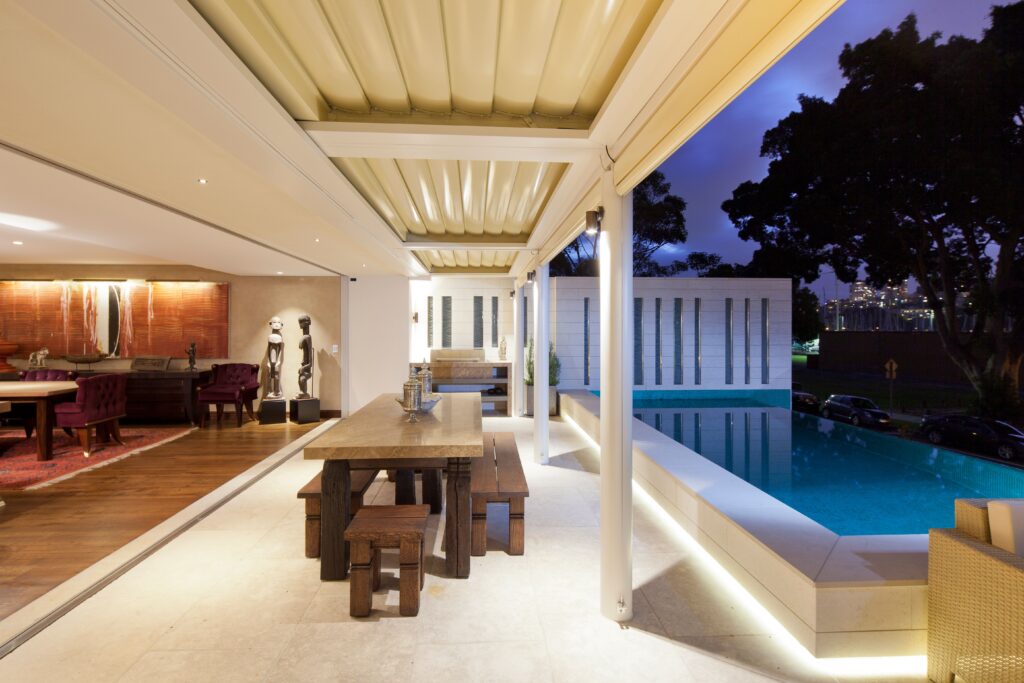
Adding pergola cover panels to an existing pergola frame is by far the most common choice. Pergolas look great all on their own, but the open slats allow rain to fall directly through onto your patio dinner. Pergola cover panels close up those openings, keep out the elements and transform the frame into a fully functional outdoor room. If your pergola has an irregular shape or size, custom patio covers made to fit your frame will give you the best fit.
Pretty simple, right?
Choosing The Right Pergola Cover Panels
Panels come in many different varieties. Depending on your climate, budget and the amount of light you want at the table, you will want to choose carefully.
Here are the three main types…
Polycarbonate Panels
Polycarbonate is a strong, clear plastic that allows natural light to pass through but prevents rain from passing through. It is lightweight, durable and shatterproof.
How it works: Your dining area stays lit up during the day. Many panels are available with a UV coating as well to keep guests safe from harsh rays while they dine.
The drawback? Clear panels can actually retain heat in extremely hot climates. Solutions are tinted or frosted versions.
Aluminium Panels
Aluminium panels provide you with a permanent roof solution. They keep out 100% of sun and rain.
Choose this option if you experience torrential downpours or blistering summers. Insulated aluminium panels take it a step further by keeping the area underneath cool during summer and warm during winter.
They require almost no upkeep either. Just hose them off every couple of months.
Adjustable Louvered Panels
Want the best of both worlds?
Louvers are slats that can open and close on a panel (sometimes operated by remote). Open louvers to let fresh air into your dining area on a sunny afternoon. Close louvers when rain begins to fall.
The downside: They’re more expensive than stationary panels. However, if you’re an outdoors-eating family year-round, nothing beats the flexibility.
Planning A Layout That Works For Gatherings
Your cover is taken care of. Now consider how people will utilize the space.
If it doesn’t fit your guests, a cover will be wasted. Measure your table, then add 3 feet (about 90 cm) or more to each side. That’ll give everyone space to slide out their chair and walk behind seated guests without bumping elbows.
Consider traffic flow. Guests will be going to and from the kitchen, grill and dining table all night. Try to keep:
- The cooking area close by: so food arrives hot
- Walkways clear: so nobody trips over cables or plant pots
- Extra seating nearby: for the guests who arrive late or want to linger
Outdoor dining is one of the main reasons people remodel to begin with. According to one poll, 55% of people said they would eat outside more if they had a remodeled outdoor space.
Oh and one more thing… Your cover should go beyond the edge of your table. Rain usually comes at an angle. A little extra overhang prevents the wind from splashing water onto your guests.
Making Your Space Comfy In Any Weather
A roof deals with rain. But “all weather” includes hot days, cold nights and blustery afternoons as well.
Here’s how to cover all of them.
Add Side Protection
Wind and sideways rain are the two biggest mood killers at an outdoor dinner.
Roll-down screens or outdoor curtains are the solution. Lower them during inclement weather and roll them back up during fair weather. Mesh screens can also keep mosquitoes at bay on warm summer nights.
Heat It Up (And Cool It Down)
Cold evenings don’t have to end the party early.
Patio heaters, infrared wall heaters or even a nearby fire pit will keep your guests warm. Just make sure you check clearance rules on any heater you place under your cover. Panel materials vary in how they deal with heat.
Add a ceiling fan attached to the pergola frame for warm weather days. It helps circulate the air and keep flies off your food.
Light The Way
Most dinners extend well after dark. Ambient lighting will prolong the night and ensure safety on stairs and pathways.
A simple lighting plan includes:
- Warm string lights across the frame
- Dimmable lights over the table
- Low path lights along walkways
Most pergola panels are designed so that you can run wires through the frame. No unsightly wires hanging down over your table top.
Bringing It All Together
A covered patio area allows you to enjoy your backyard throughout the year. You won’t need to run inside when it rains!
Plus it’s a wise investment for your home. Nearly 56% of industry experts believe homeowners are more interested in spending money on their outdoors than they were last year.
To quickly recap:
- Pick the right pergola cover panels for your climate
- Plan a layout with plenty of room for guests
- Add screens, heaters and fans for all-weather comfort
- Light it up for long evenings
- Invite everyone over (rain or shine)
Rain, sun or wind, your next gathering doesn’t have to depend on the forecast.