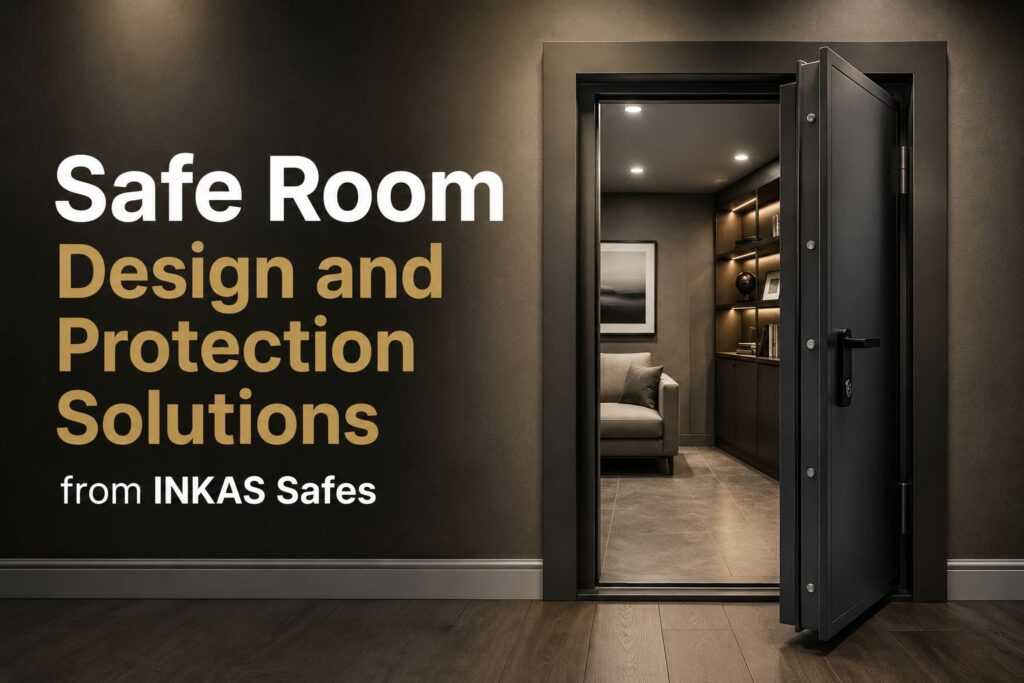
A safe room gives people a secure place when normal home defenses are no longer enough. It can also protect valuables, records, firearms, and other items from theft or forced entry.
INKAS Safes offers several ways to build stronger secure spaces inside homes and businesses. Its Residential Vault Door can turn an existing basement cold room into a vault or panic room. The INKAS Situation Room is a separate room system built with layered ballistic panels and a secure door.
These options serve different needs, but both focus on strong physical barriers and controlled access. INKAS also makes custom safes for owners who need secure storage outside a full room.
What Is a Safe Room and Why Is It Used?
INKAS describes its Situation Room as a panic room or safe room. The room is made for private homes or businesses and can be used during break-ins or home invasions.
The room can also hold high-value goods, important records, and digital storage devices. This makes it useful for protecting both people and property in one secure space.
The term “safe room” can also have a more narrow meaning. FEMA uses the term for hardened rooms built to protect people during tornadoes and hurricanes.
Such rooms must meet FEMA design rules and related storm shelter standards. An INKAS security room should not be assumed to meet FEMA safe room rules.
Buyers needing storm shelter protection should check the required codes and standards before building.
Key Elements of a Well-Designed Safe Room
A secure room needs several parts that work together as one system. Strong walls alone cannot provide full protection if the door or lock remains weak.
Reinforced Walls, Floors, and Ceilings
A secure room depends on more than a strong door. Its walls and other surfaces must also resist the threats the owner plans for.
The INKAS Situation Room uses sectional ballistic panels with a wood base and drywall finish. INKAS states that its panels provide BR6 protection under the EN 1063 standard.
The panels overlap to reduce direct paths through the joints between each section. The room can be built over existing drywall and floors without major demolition.
The system can also be fixed to the home frame during other building work. INKAS lists its standard room size as eight feet by eight feet by eight feet.
Other sizes can be made to suit the available space.
Secure Entry Points
The door is often a main target during a forced entry attempt. A weak entrance can reduce the value of strong walls around it.
The INKAS Situation Room includes a ballistic door that users can lock from inside. People inside can also leave without relying on someone outside the room.
INKAS also offers a Residential Vault Door for existing basement rooms. The company uses reinforced ballistic steel and a metal composite in the door construction.
Reliable Locking Systems
A lock must resist tampering while remaining simple for approved users. INKAS fits its Situation Room with a UL certified Type 1 lock.
The Residential Vault Door uses a digital keypad with a UL certified lock. INKAS also uses solid steel bolts that help secure the door against prying and force.
Lock choice should match the main use of the room. A family panic room may need different access rules than an asset storage room.
Interior Access and Emergency Exit
People inside a secure room need a safe way to leave. This matters if the outer lock becomes damaged during an attack.
INKAS states that its vault doors include a one-handed emergency escape latch from inside. The latch allows users to exit even when the outside lock stops working.
The Situation Room also lets users lock the door from inside and leave on their own. This keeps control with the people using the room.
Why the Vault Door Is Critical for Safe Room Security
A secure room is only as strong as its main entry points. The door must resist force, prying, lock attacks, and attempts to weaken its hardware.
INKAS builds its Residential Vault Door with a metal composite and reinforced ballistic steel. The current product page lists a three-inch door thickness, four locking bolts, and heavy-duty hinges.
INKAS also lists a BR6 ballistic rating and a 60-minute fire rating for the door. Residential models are shown with both inward and outward swing choices.
A vault door can turn an existing room into useful secure storage. This can suit owners whose storage needs are too large for standard or custom safes.
INKAS Safes Residential Vault Door Solutions
INKAS designs its Residential Vault Door for homes that already have a suitable secure room. Basement cold rooms with cement walls are one use shown by the company.
The table below summarizes the main features listed by INKAS for its Residential Vault Door.
| Feature | INKAS Residential Vault Door |
| Main use | Home vault, panic room, gun room, or secure basement room |
| Construction | Reinforced concrete, metal composite, and ballistic steel |
| Ballistic rating | BR6 |
| Fire rating | 60 minutes |
| Door thickness | About 3 inches |
| Lock | Digital keypad with UL certified lock |
| Locking bolts | Four solid steel bolts |
| Hinges | Heavy-duty machined hinges |
| Door swing | Inward or outward options |
| Emergency exit | One-handed interior escape latch |
| Listed door heights | 78-inch and 82-inch models |
| Approximate weight | About 540 pounds |
Reinforced Composite Construction
INKAS states that its Residential Vault Door combines reinforced concrete and ballistic steel layers. The door is designed for use with cement walls around the room.
This setup can turn a basement cold room into a home vault, gun room, or panic room. It lets owners use an existing room instead of adding another full room.
Bullet-Resistant Steel Protection
The Residential Vault Door uses reinforced ballistic steel in its construction. INKAS lists the door with a BR6 ballistic rating.
The Situation Room uses BR6 sectional ballistic panels as part of its wall system. INKAS states that these panels provide protection under the EN 1063 BR6 level.
A security rating should always be read within its stated scope. Walls, doors, locks, and joints may have different test methods and limits.
UL-Certified Locking Systems
The Residential Vault Door uses a UL certified lock with a digital keypad. INKAS lists the lock as made in the United States.
The Situation Room page lists a UL certified Type 1 lock. INKAS says the lock helps guard against picking and tampering.
The exact lock model and setup should be checked before placing an order. This helps match the lock with the planned use of the room.
Solid Steel Bolts and Heavy-Duty Hinges
INKAS lists solid steel deadbolts as a key feature of its Residential Vault Door. The bolts slide into place to help resist prying and forced entry.
The door also uses heavy-duty machined hinges designed to resist removal attempts. Strong hinges matter because attackers may target the hinge side during forced entry.
Fire Protection Features
INKAS lists a 60-minute fire rating for its Residential Vault Door. This rating applies to the product as stated by the manufacturer.
The Situation Room page also gives advice for improving fire safety. INKAS recommends basement placement with a dedicated air system when fire safety is a main concern.
A rated door does not make the entire room a rated fire shelter. Walls, vents, joints, and other parts must also support the required fire plan.
Where a Safe Room Can Be Built in a Home
Room location affects access, construction work, and the type of protection available. INKAS offers options for both existing rooms and new room systems.
Basement and Cold Room Conversion
INKAS promotes its Residential Vault Door for basement cold rooms with cement walls. This can make sense when the home already has a strong room shell.
The wall opening must fit the selected door model. INKAS lists residential door types for 78-inch and 82-inch openings.
Using an existing room can also reduce the need for a separate room structure. The walls and door should still suit the risks the owner wants to address.
Dedicated Panic Rooms
The INKAS Situation Room can be placed on the first floor, second floor, or basement. The system can also be taken apart for repairs or later changes.
Its standard size is eight feet wide, eight feet long, and eight feet high. INKAS can change the room size to suit other spaces.
This gives owners more choice when a basement cold room is not available. Placement should still allow fast access during an emergency.
Secure Rooms for Valuables and Collections
A secure room can store jewelry, records, high-value goods, hard drives, and other assets. INKAS also markets its Residential Vault Door for home vaults and gun rooms.
Some owners may not need a full walk-in room for smaller items. In that case, custom safes can provide a better fit for the space and storage plan.
Safe Room vs. Panic Room vs. Home Vault
These terms often overlap, but the planned use helps explain their main differences. A panic room is mainly a secure place for people during a threat.
A home vault is mainly designed to protect assets from theft and forced entry. It may hold jewelry, cash, records, collections, firearms, or other valuable property.
INKAS uses “Situation Room,” “panic room,” and “safe room” when describing its fortified room system. Its Residential Vault Door can also create a panic room, gun room, or home vault.
FEMA uses “safe room” in a different technical sense for tornado and hurricane protection. A security room should not be called FEMA compliant without proof that it meets those rules.
The planned risk should guide which type of room makes sense. Human safety, asset storage, and severe weather protection can require very different designs.
Choosing the Right Security Level for Your Safe Room
Start with the main risk rather than the room size or finish. A room for people during a break-in has different needs than an asset vault.
Think about the walls, door, lock, exit method, fire plan, and access rules. Each part should support the same main security goal.
Storage needs also matter when the room will hold valuable property. Shelves, racks, drawers, lighting, and moisture control may help protect some items.
INKAS offers custom safes with options such as shelves, drawers, lighting, gun racks, and selected climate features. Fire and water protection are also available on selected safe models.
Security ratings should also match the value and type of stored assets. Higher protection does not remove the need for good room planning and controlled access.
Safe Room Planning and Installation Considerations
Careful planning helps prevent problems after the room or door arrives. Measurements, access routes, wall strength, and daily use should all be checked first.
Room Size and Door Opening
Measure the room and wall opening before choosing a vault door. INKAS lists different opening sizes for its residential 78-inch and 82-inch models.
The listed wall openings are 35 inches wide for these residential door choices. Height changes based on the selected 78-inch or 82-inch model.
The Situation Room uses an eight-foot cube as its standard size. INKAS states that other dimensions can be made for different spaces.
Door Swing and Access
Door swing affects furniture placement, hall space, and how people enter or leave. INKAS lists inward and outward swing versions among its Residential Vault Door models.
The route to the room should stay clear and easy to use. Approved users should also know how the lock and inside exit system work.
Door placement should allow enough room for its full opening path. This is especially important in basements, narrow halls, and storage areas.
Wall Construction
A strong vault door should not be placed in a weak wall system. INKAS promotes its residential door for existing cold rooms enclosed by cement walls.
The Situation Room takes a different approach with its own layered ballistic panel structure. The panels create a standalone room inside the existing building.
The better option depends on what structure already exists in the home. New building work may also allow more choices for room size and placement.
Installation and Daily Use
The Residential Vault Door weighs about 540 pounds, according to the current product page. Correct handling and fitting are important because of this weight.
The listed kit includes an outer frame, door frame, several panels, and two heavy-duty hinges. Buyers should check the full installation needs before delivery.
Owners should also plan how the room will work after installation. Lighting, power, air, communication, storage, and exit access can affect daily use.
For smaller secure storage inside or near the room, INKAS custom safes can be sized around stored items. This can keep valuable property organized without filling the main room.
How INKAS Safes Helps Create High-Security Residential Spaces
INKAS Safes makes vault doors, fortified room systems, residential safes, and other secure storage products. Its room options can protect people, valuables, records, and other assets inside one fixed space.
The Residential Vault Door is aimed at suitable existing basement rooms with cement walls. The Situation Room is a separate panel system that can be installed on several floors.
Both options use ballistic materials and UL certified locking systems, based on current INKAS product pages. The right choice depends on the building, planned use, risk level, and local rules.
INKAS also builds custom safes for homes and businesses with different storage needs. Buyers can choose options such as size, layout, locks, lighting, shelves, drawers, and other features.
This gives homeowners several ways to build stronger physical security. They can protect a full room, create a vault, or secure smaller items in one safe.
Final Thoughts on Safe Room Protection
A safe room should be planned as a complete security system, not just a strong door. Walls, locks, exits, access, fire risks, and room use all need attention.
INKAS offers two clear paths for room-based home security. A vault door can convert a suitable existing room, while the Situation Room provides a separate panel-built space.
The final design should match the real risks the owner wants to address. Any claim tied to storm, fire, or ballistic protection should match the tested product and stated rating.
Good planning also prevents owners from paying for space or features they do not need. A full secure room, home vault, or custom safe should match its intended use.
 Zyvaris Eldwain writes the kind of interior design trends content that people actually send to each other. Not because it's flashy or controversial, but because it's the sort of thing where you read it and immediately think of three people who need to see it. Zyvaris has a talent for identifying the questions that a lot of people have but haven't quite figured out how to articulate yet — and then answering them properly.
They covers a lot of ground: Interior Design Trends, DIY Home Improvement Ideas, Home Style Inspirations, and plenty of adjacent territory that doesn't always get treated with the same seriousness. The consistency across all of it is a certain kind of respect for the reader. Zyvaris doesn't assume people are stupid, and they doesn't assume they know everything either. They writes for someone who is genuinely trying to figure something out — because that's usually who's actually reading. That assumption shapes everything from how they structures an explanation to how much background they includes before getting to the point.
Beyond the practical stuff, there's something in Zyvaris's writing that reflects a real investment in the subject — not performed enthusiasm, but the kind of sustained interest that produces insight over time. They has been paying attention to interior design trends long enough that they notices things a more casual observer would miss. That depth shows up in the work in ways that are hard to fake.
Zyvaris Eldwain writes the kind of interior design trends content that people actually send to each other. Not because it's flashy or controversial, but because it's the sort of thing where you read it and immediately think of three people who need to see it. Zyvaris has a talent for identifying the questions that a lot of people have but haven't quite figured out how to articulate yet — and then answering them properly.
They covers a lot of ground: Interior Design Trends, DIY Home Improvement Ideas, Home Style Inspirations, and plenty of adjacent territory that doesn't always get treated with the same seriousness. The consistency across all of it is a certain kind of respect for the reader. Zyvaris doesn't assume people are stupid, and they doesn't assume they know everything either. They writes for someone who is genuinely trying to figure something out — because that's usually who's actually reading. That assumption shapes everything from how they structures an explanation to how much background they includes before getting to the point.
Beyond the practical stuff, there's something in Zyvaris's writing that reflects a real investment in the subject — not performed enthusiasm, but the kind of sustained interest that produces insight over time. They has been paying attention to interior design trends long enough that they notices things a more casual observer would miss. That depth shows up in the work in ways that are hard to fake.