
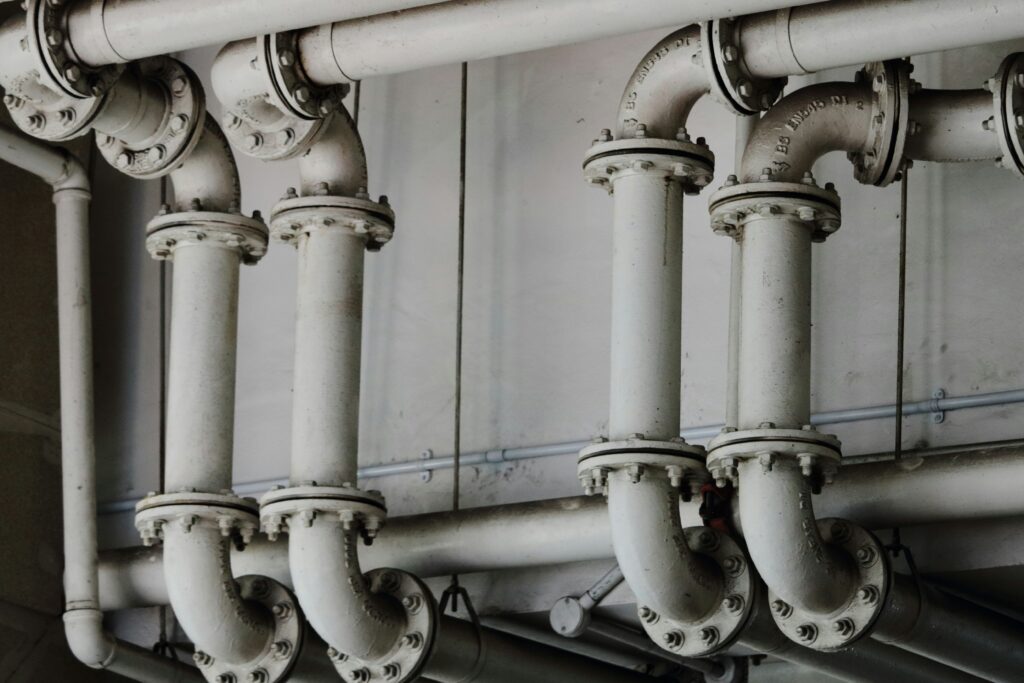
A strange humming sound from the plumbing can be surprisingly unsettling. There’s no obvious leak, the faucets still work, and nothing looks broken—but somewhere behind the wall, you can hear a low vibration that wasn’t there before.
So, why do water pipes hum?
In most homes, the noise has something to do with water pressure, restricted flow, a worn valve, or a pipe that isn’t being held firmly in place. The humming itself usually isn’t an emergency, but it can be a useful warning that something in the plumbing system deserves attention.
The first step is figuring out when the sound happens and what causes it to start.
1. High Water Pressure
Water pressure is one of the first things worth checking when several pipes or fixtures seem noisy.
When pressure is too high, water moves through valves and fittings with greater force. That movement can create vibration, particularly where the water encounters a narrow passage or partially restricted valve.
You may notice the humming when several fixtures are running, or you may hear it even when only one faucet is open.
Over time, excessive pressure can also put unnecessary strain on faucets, toilets, appliance hoses, shut-off valves, and water heaters.
If the sound seems to come from different parts of the house, rather than one particular fixture, pressure is a good place to start.
2. A Worn Valve
Sometimes the problem is much smaller than a whole-house pressure issue.
Valves control the movement of water, and their internal parts don’t last forever. As a valve wears down, water may no longer pass through it smoothly. Instead, the flow can create a faint vibration or buzzing sound.
Common suspects include:
- Toilet fill valves
- Faucet cartridges
- Shut-off valves
- Appliance valves
- Pressure-reducing valves
There’s a useful clue here: if the humming starts whenever one particular fixture is used, investigate that fixture first.
For example, a noise that begins after flushing and disappears once the toilet finishes filling may point toward the fill valve.
3. Loose Pipe Supports
Pipes aren’t supposed to move around freely inside walls or under floors.
They are normally secured with clips, straps, or other supports. Those supports can loosen over the years, though, particularly as plumbing expands and contracts with temperature changes.
Once a pipe has room to move, normal water flow may make it vibrate against framing or another surface.
The result isn’t always a dramatic bang. Sometimes it’s simply a low hum or buzz.
And because vibration travels through building materials, the place where you hear the noise isn’t necessarily where the problem starts.
4. Mineral Deposits Restricting Flow
Hard water can gradually change how plumbing fixtures behave.
Calcium and magnesium deposits can collect inside faucet aerators, valves, cartridges, and other narrow passages. As the opening becomes smaller, water has less room to move.
That restriction can create turbulence, and turbulence can create noise.
Mineral buildup becomes a stronger possibility if the humming is accompanied by weaker water flow, reduced faucet pressure, or visible scale around fixtures.
In some cases, cleaning the affected component is enough to restore normal flow. In others, an old valve or cartridge may need replacement.
5. A Problem With the Pressure-Reducing Valve
Many homes have a pressure-reducing valve near the point where the main water supply enters the property.
Its job is straightforward: keep incoming water pressure at a suitable level for the home’s plumbing.
When the valve begins to wear out, however, it may cause humming, vibration, or noticeable changes in water pressure.
This type of problem can be confusing because the symptoms may appear at several fixtures at once.
If the same noise seems to occur in different parts of the house and you also notice inconsistent pressure, the main pressure-control equipment may need to be checked.
6. Toilets and Appliances Can Be the Culprit
Not every humming noise comes from the main water line.
Your toilet, washing machine, dishwasher, refrigerator, and other water-using appliances all have valves and supply connections.
A worn valve can vibrate when water passes through it, making the noise sound like a much larger plumbing problem.
Try to notice whether the humming follows a particular activity.
Does it happen when the washing machine starts filling?
Does it appear when the dishwasher runs?
Does it begin immediately after flushing?
Those details can save a lot of guesswork.
7. Sudden Changes in Water Flow
Humming can sometimes occur alongside other plumbing noises, such as rattling, knocking, or banging.
Sudden changes in water flow can create pressure fluctuations inside the plumbing. One example is water hammer, which happens when moving water is stopped abruptly.
A little occasional noise isn’t necessarily cause for alarm. But repeated banging combined with strong vibration, humming, or pressure changes is worth investigating.
How to Find the Source of the Humming
You don’t need to start opening walls to investigate.
Begin with the easy stuff.
Turn your faucets on and off one at a time. Flush the toilets. Run the washing machine and dishwasher. Listen for changes.
Then ask yourself:
Does the noise happen with one fixture?
The valve or supply connection may be responsible.
Does it happen throughout the house?
Look more closely at water pressure or the main supply.
Does it begin after flushing?
Check the toilet fill mechanism.
Does it only happen when an appliance runs?
Inspect that appliance’s water connection.
This won’t diagnose every plumbing problem, but it can narrow down the possibilities considerably.
Is a Humming Pipe Dangerous?
Usually, the humming itself isn’t dangerous.
The important question is what is causing it.
A persistent hum can sometimes point toward excessive pressure, restricted water flow, worn plumbing components, or loose piping. Those issues don’t necessarily mean a major failure is about to happen, but leaving them unchecked can allow a small problem to become more expensive.
If you’re hearing the sound regularly, it’s worth looking at the bigger picture. Humming water pipes can signal an underlying plumbing issue, especially when the noise is accompanied by changes in pressure or water flow
Pay closer attention if the humming comes with:
- Water leaks
- Damp walls or ceilings
- Water stains
- Strong pipe vibration
- Sudden pressure changes
- Corrosion
- Reduced water flow
- Unusually high water bills
Those are signs that the noise may be part of a larger plumbing problem.
Can You Fix a Humming Pipe Yourself?
Some minor issues are reasonable DIY projects.
You may be able to clean a faucet aerator, replace a toilet fill valve, tighten an accessible pipe support, or inspect visible shut-off valves.
More complicated work is a different story.
If the suspected cause involves the home’s main water pressure, a pressure-reducing valve, or plumbing hidden inside walls, getting professional help is usually the safer choice.
And if the strange noise is coming specifically from the bathroom, don’t overlook the fixture itself. A whistling toilet, for example, can point to a different valve or water-flow problem.
When to Call a Plumber
Don’t wait if the humming is getting noticeably louder or you’re seeing other warning signs.
Professional inspection makes sense when:
- Several fixtures are affected
- Pipes are vibrating strongly
- Water pressure changes suddenly
- You discover a leak
- Water damage is visible
- Humming is accompanied by repeated banging
- You can’t identify the source
A plumber can check pressure, valves, pipe supports, and other components without relying on guesswork.
Final Thoughts
So, why do water pipes hum?
There isn’t one answer.
Sometimes it’s a worn valve. Sometimes it’s high pressure, mineral buildup, a loose pipe support, or a problem with the home’s pressure-control equipment. And sometimes the noise is coming from a single toilet or appliance rather than the plumbing system as a whole.
The useful thing is to treat the sound as information.
Notice when it starts. Notice what makes it stop. Pay attention to changes in pressure, water flow, and other plumbing noises.
A humming pipe doesn’t automatically mean you’re facing an expensive repair. But investigating it early can help you catch the underlying issue while it’s still manageable.
 Ask Donel Robertsonail how they got into diy home improvement ideas and you'll probably get a longer answer than you expected. The short version: Donel started doing it, got genuinely hooked, and at some point realized they had accumulated enough hard-won knowledge that it would be a waste not to share it. So they started writing.
What makes Donel worth reading is that they skips the obvious stuff. Nobody needs another surface-level take on DIY Home Improvement Ideas, Outdoor Living Solutions, Essential Gardening Tips. What readers actually want is the nuance — the part that only becomes clear after you've made a few mistakes and figured out why. That's the territory Donel operates in. The writing is direct, occasionally blunt, and always built around what's actually true rather than what sounds good in an article. They has little patience for filler, which means they's pieces tend to be denser with real information than the average post on the same subject.
Donel doesn't write to impress anyone. They writes because they has things to say that they genuinely thinks people should hear. That motivation — basic as it sounds — produces something noticeably different from content written for clicks or word count. Readers pick up on it. The comments on Donel's work tend to reflect that.
Ask Donel Robertsonail how they got into diy home improvement ideas and you'll probably get a longer answer than you expected. The short version: Donel started doing it, got genuinely hooked, and at some point realized they had accumulated enough hard-won knowledge that it would be a waste not to share it. So they started writing.
What makes Donel worth reading is that they skips the obvious stuff. Nobody needs another surface-level take on DIY Home Improvement Ideas, Outdoor Living Solutions, Essential Gardening Tips. What readers actually want is the nuance — the part that only becomes clear after you've made a few mistakes and figured out why. That's the territory Donel operates in. The writing is direct, occasionally blunt, and always built around what's actually true rather than what sounds good in an article. They has little patience for filler, which means they's pieces tend to be denser with real information than the average post on the same subject.
Donel doesn't write to impress anyone. They writes because they has things to say that they genuinely thinks people should hear. That motivation — basic as it sounds — produces something noticeably different from content written for clicks or word count. Readers pick up on it. The comments on Donel's work tend to reflect that.