
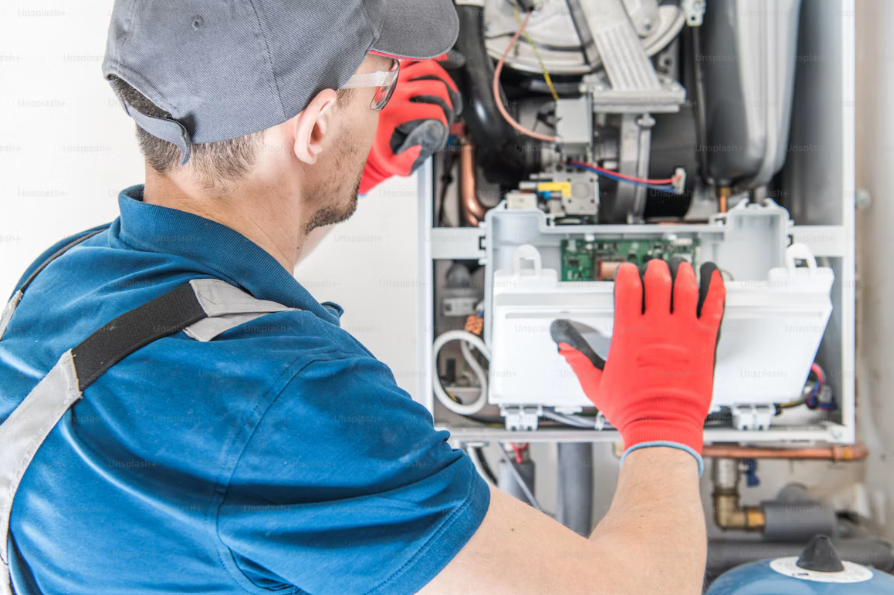
A furnace breaks down in January, and the first thought is getting someone out to the house. Most homeowners now call the same company for their plumbing service. They book the next available appointment, hoping the part is in stock. Heating swaps have one wrinkle. Licensed furnace installers often start with paperwork before discussing equipment. This surprises many people who simply want their heat restored.
The short version is yes, almost everywhere in the US. Not because a city wants your money. A gas appliance venting combustion byproducts is different from a new dishwasher.
What that means for your budget and your eventual home sale is worth a few minutes.
Is a Permit Required to Replace a Furnace?
Whether you need a permit to replace furnace equipment comes down to local code, and in most cities and counties the answer is yes. A replacement touches gas piping, venting, combustion air, condensate drainage, and line-voltage wiring. Any one of those can kill somebody if it’s done wrong, which is why mechanical codes treat the job as new work rather than maintenance.
A few exceptions exist. Some unincorporated rural areas don’t have a building department at all. Some places allow exemptions for identical replacements. This means nothing changes with the vent or gas line. However, this is much less common than contractors suggest. Manufactured homes are subject to separate federal and state standards.
Furnace replacement permit requirements vary a lot between a suburb of Phoenix and a township near Cleveland. One call to the building department settles it.
Who Is Responsible for Getting a Furnace Replacement Permit?
The contractor, in practice. Licensed HVAC companies pull permits as part of normal business, and the fee usually shows up as a line item on the estimate. If a quote doesn’t mention one, ask where it went.
Legally, the property owner carries the exposure. A city can cite the homeowner, order the work corrected, and in some places force removal. Owners can pull their own permits in many areas through an owner-builder process. This works well for DIYers with real gas experience, but not for most others.
A contractor who advises you to skip the furnace replacement permit to save some money is revealing his approach to all his work.
What Is the Furnace Replacement Permit Process?
Paperwork first. The application asks for:
- Equipment make and model
- BTU input
- Vent configuration
- Installer’s license number
Please provide these details. Some cities now ask for a load calculation, since oversizing has been the industry’s default sin for decades.
Then the fee, then the install, then the inspection. An inspector checks several things after the installation. They look for gas leaks and clearances around the cabinet. They also check the vent slope and material, the electrical disconnect, and where the condensate line ends.
Failures are common and usually small. A missing drip leg. A vent pipe two inches short of the required termination distance. The contractor fixes it, calls for a reinspection, and that’s the end of it.
How Much Does a Furnace Replacement Permit Cost?
Most homeowners pay somewhere between $50 and $400 for a furnace replacement permit. Flat mechanical fees range from $75 to $250 across much of the country. In some areas, the fee is a percentage of the job value. For example, a $9,000 install can push the charge toward the higher end of that range. Add a reinspection fee if the first visit fails. Against the price of the furnace itself, it’s noise.
What Happens If You Replace a Furnace Without a Required Permit?
Nothing, for a while. That’s the trap. Then the house goes on the market. A buyer’s inspector sees a furnace that doesn’t match the permits. The title company checks the records. Then, unexpected negotiations begin: a retroactive permit, an inspection of hidden work, or sometimes a credit at closing. Unpermitted mechanical work may need disclosure under many state seller laws.
Insurance is the uglier scenario. A carrier investigating a fire or a carbon monoxide claim will look at whether the appliance was installed to code and signed off. Denials over unpermitted work do happen.
In conclusion
Before any money changes hands, get the permit number in writing. Not a promise to pull one later, but the actual number, or a note on the contract saying the permit is included and will be filed before work starts. Then follow up to confirm the inspection passed. Ten minutes of asking turns the furnace into the city’s problem to verify, instead of yours to defend five years from now.