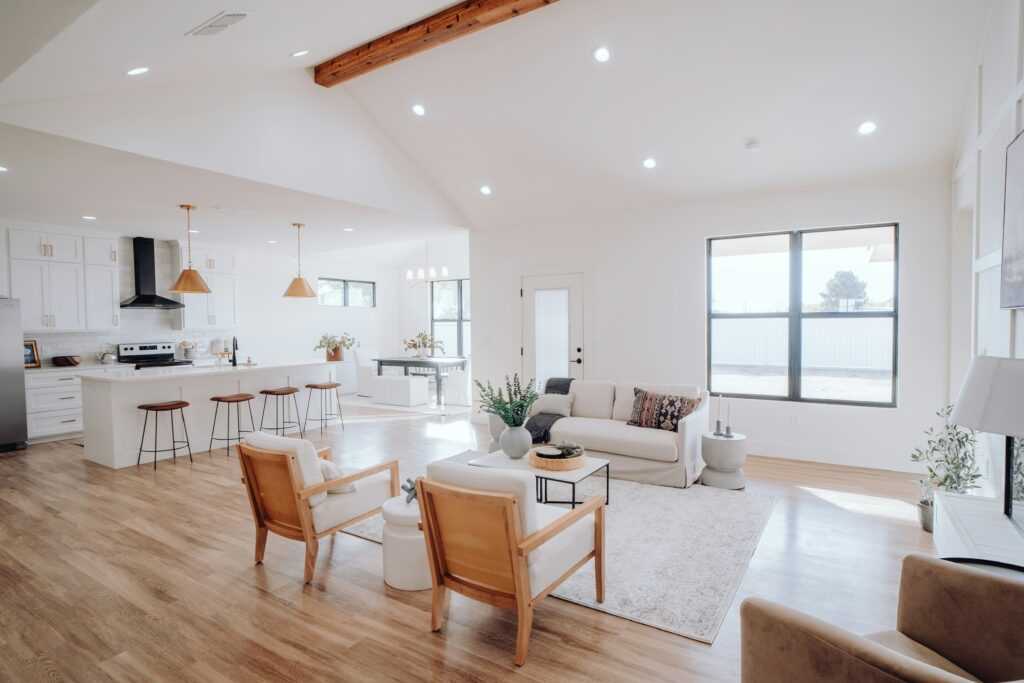
Do you want your open-plan home to feel like one space… not three rooms fused together?
Open-plan living is consistently one of the most desired floor plans of homeowners. 61% of new-build owners said an open-concept floor plan was their home’s most important feature.
Here’s the problem:
Many remodelers tear down walls and leave floors pieced together. Ceramic tile in the kitchen. Hardwood in the family room. A rug around the chair(s).
The walls are gone, but the space still feels chopped up.
The fix is simple. Pick one floor material and run it through every zone.
Here is how to do it…
Inside this guide:
- Why One Floor Material Works So Well
- The Best Floor Materials For Open-Plan Spaces
- Sealing Limestone Floor Tiles The Right Way
- How To Zone A Room Without Changing The Floor
Why One Floor Material Works So Well
A single floor is the glue that holds an open-plan space together.
When you can gaze from your kitchen counter all the way to your sofa without your eye encountering a join or threshold strip, the entire space feels larger. Calmer. Plus there are no trip hazards between room transitions, which is helpful when you have kids sprinting around the house.
Natural stone is a top pick for this job. And limestone leads the pack.
Limestone tiles from suppliers such as Lubelska offer a soft consistent tone that works well in high traffic/busy kitchens, dining zones and relaxing lounge areas. However, there is one thing you need to know. Limestone is porous so sealant must be applied to limestone floor tiles BEFORE the room starts being used. That is the key step to ensuring one beautiful flooring surface through every area.
Pretty cool, right?
The Best Floor Materials For Open-Plan Spaces
Not all floors are cut out for the job. On an open-plan floor you have spills in the kitchen, dropped plates in the dining room and slippers in the lounge…simultaneously.
Here are the 3x materials that do it best.
Natural Limestone
Limestone has a warm appearance and a timeless feel. It complements both contemporary kitchens and period properties. Light scuffs disguise easily on honed limestone.
It also works great with underfloor heating. This way you get both a warm floor in the living room and a practical floor in the kitchen from just one tile.
The trade-off: it needs sealing and a little care.
Porcelain Tiles
Porcelain is durable, low maintenance and available in stone and wood finishes. It’s a great option for busy households.
However, it can seem cool and somewhat plain compared to reality. When you are near up close the repeating pattern usually give it away.
Engineered Wood
Engineered wood feels cozy and pairs beautifully in living areas. Trouble begins when you get to the kitchen area. Splashes, grease and dropped pans can stain it all.
Well if your kitchen dominates your open space wood might be a gamble.
So Which One Should You Choose?
Honestly, it comes down to how you live.
If you value low maintenance above all else, go porcelain. If you want warmth in a heavily lounge-focused room with a tiny galley kitchen, wood can work. But if you want a true natural surface that works with every zone and improves with age…it’s tough to beat limestone. Key word there being sealed properly.
Sealing Limestone Floor Tiles The Right Way
This is the part most people get wrong.
Liquid is absorbed by limestone easily. With an unsealed floor one spilled glass of red wine can leave a stain. That stain would sit in plain sight of everyone in an open-plan room.
The good news?
Sealing is easy to do if you follow the right steps:
- Clean the tiles with a pH-neutral stone cleaner
- Let the floor dry fully (give it at least 24 hours)
- Apply a penetrating (impregnating) sealer with a soft brush or pad
- Wipe away any sealer left sitting on the surface
- Leave it to cure before walking on it
A penetrating sealer penetrates into the stone. Instead of forming a layer on top. That maintains the natural matt finish but prevents stains from penetrating.
Seal Before And After Grouting
Here’s a tip that saves a lot of stress…
Apply a coat of sealer before grouting. It prevents grout haze from staining the stone. Apply a final coat after the grout has cured.
How Often Should You Reseal?
Generally speaking, limestone floors will require re-sealing every 1-3 years. A high traffic kitchen area may require it more frequently than a seldom used lounge corner.
Do the water test. Place a few drops of water on the tile. If the water beads up, the seal is good. If it darkens the stone after a few minutes…you need to reseal.
Also remember to stay away from vinegar and acidic cleaners. They will etch limestone even if it is sealed.
How To Zone A Room Without Changing The Floor
Open floor plans aren’t for everyone. A recent survey showed that only 51% of Americans prefer an open floor plan. So almost half want more defined spaces.
The trick is to create zones without breaking up your floor.
Use Rugs To Anchor Each Area
Throw rug under sofa instantly defines living area. Throw rug under dining table defines eating area. Limestone still flows around both so room doesn’t feel chopped up.
Layer Your Lighting
Lighting is a quiet but powerful way to split a space. Try:
- Pendants over the kitchen island
- A low-hanging light above the dining table
- Floor and table lamps in the lounge
Each zone gets its own mood, without a single wall.
Let Furniture Do The Work
Having a sofa turned against the kitchen cuts the room in half. Open shelving accomplishes the same thing and allows light to pass through.
Simple. Effective. And your floor stays untouched.
The Final Word On One-Floor Living
Selecting a single flooring material throughout is the simplest way to create a cohesive calmness to an open-plan space. Limestone is ideal because it:
- Looks warm and timeless
- Works in both kitchen and living zones
- Pairs well with underfloor heating
The one thing to add to what has already been said is… DON’T FORGET THE PREP. Properly sealing limestone floor tiles, resealing (when the water test dictates) and cleaning with mild products will ensure that your one gorgeous surface stays beautiful for years to come.
To quickly recap:
- Pick one material for every zone
- Seal it properly before and after grouting
- Use rugs, lighting and furniture to create zones
Get the floor right, and the rest of your open-plan space falls into place.
 Ask Donel Robertsonail how they got into diy home improvement ideas and you'll probably get a longer answer than you expected. The short version: Donel started doing it, got genuinely hooked, and at some point realized they had accumulated enough hard-won knowledge that it would be a waste not to share it. So they started writing.
What makes Donel worth reading is that they skips the obvious stuff. Nobody needs another surface-level take on DIY Home Improvement Ideas, Outdoor Living Solutions, Essential Gardening Tips. What readers actually want is the nuance — the part that only becomes clear after you've made a few mistakes and figured out why. That's the territory Donel operates in. The writing is direct, occasionally blunt, and always built around what's actually true rather than what sounds good in an article. They has little patience for filler, which means they's pieces tend to be denser with real information than the average post on the same subject.
Donel doesn't write to impress anyone. They writes because they has things to say that they genuinely thinks people should hear. That motivation — basic as it sounds — produces something noticeably different from content written for clicks or word count. Readers pick up on it. The comments on Donel's work tend to reflect that.
Ask Donel Robertsonail how they got into diy home improvement ideas and you'll probably get a longer answer than you expected. The short version: Donel started doing it, got genuinely hooked, and at some point realized they had accumulated enough hard-won knowledge that it would be a waste not to share it. So they started writing.
What makes Donel worth reading is that they skips the obvious stuff. Nobody needs another surface-level take on DIY Home Improvement Ideas, Outdoor Living Solutions, Essential Gardening Tips. What readers actually want is the nuance — the part that only becomes clear after you've made a few mistakes and figured out why. That's the territory Donel operates in. The writing is direct, occasionally blunt, and always built around what's actually true rather than what sounds good in an article. They has little patience for filler, which means they's pieces tend to be denser with real information than the average post on the same subject.
Donel doesn't write to impress anyone. They writes because they has things to say that they genuinely thinks people should hear. That motivation — basic as it sounds — produces something noticeably different from content written for clicks or word count. Readers pick up on it. The comments on Donel's work tend to reflect that.