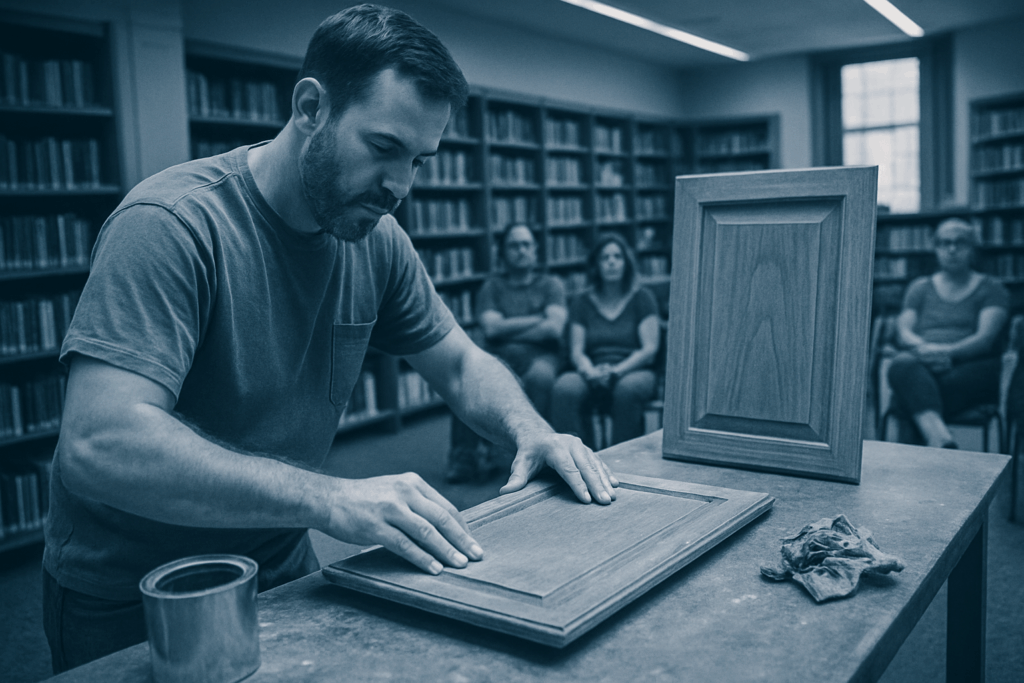
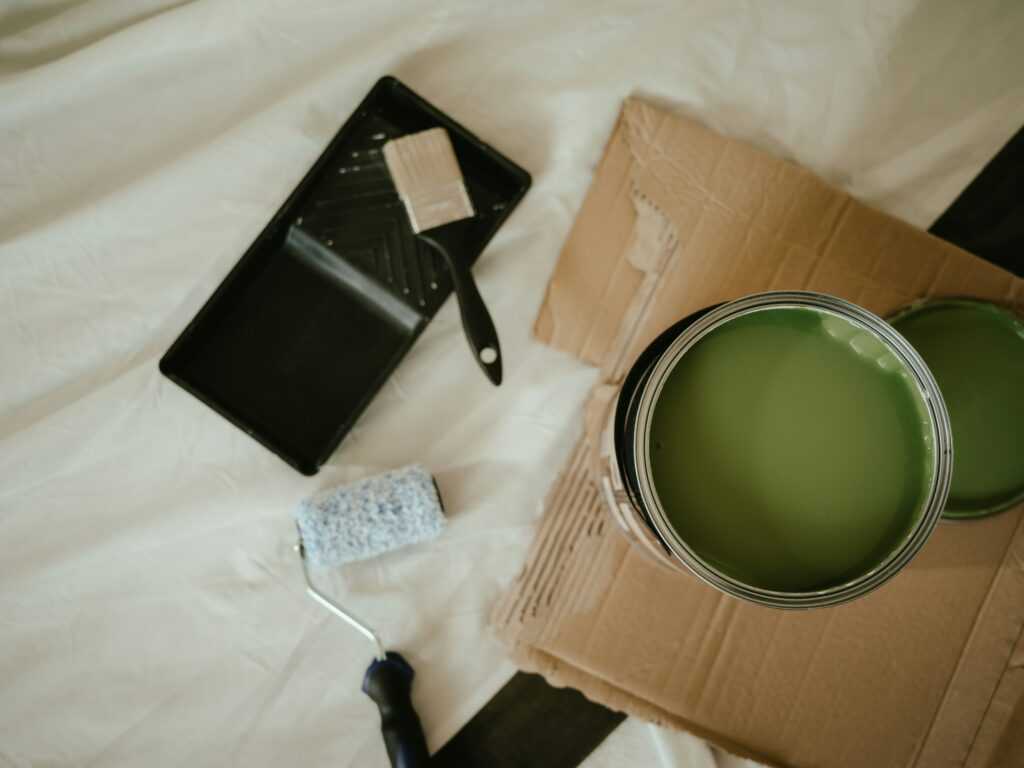
Want to give that tired old dresser a brand new look?
Painting furniture is one of the simplest (and least expensive) ways to update a room, but step into any craft store and you’ll soon find yourself facing a wall of bewildering options. Two paints consistently rank highest:
- Milk paint
- Chalk paint
Both provide you with that coveted soft chalky matte paint look. Both are beginner friendly, and both have a huge following of fans.
Here’s the problem:
They function differently. Choose incorrectly and your DIY project this weekend can become a chippy, splotchy disaster.
Here’s What’s Inside:
- What Is Milk Paint?
- What Is Chalk Paint?
- Milk Paint vs. Chalk Paint: The 4 Big Differences
- Which Paint Should You Pick?
What Is Milk Paint?
Milk paint is one of the oldest paints in existence. Humans have been using it for millennia.
It’s made from a short list of natural ingredients:
- Milk protein (casein)
- Lime
- Clay
- Earth pigments
Most milk paint is sold in a dry powdered form. You’ll need to mix it with water before you use it.
Why is that important? Because you get to decide how opaque it is. More water = thin, translucent wash. Less water = opaque coverage.
But here’s the thing…
Milk paint is stubborn. It penetrates raw wood beautifully, yet flakes off cured glossy or varnished surfaces like mad.
Some people enjoy the “chippy” paint look because it gives a brand new piece the appearance of being 100 years old.
Some people hate it. (Easily fixed by adding a bonding agent which allows the paint to adhere to virtually any surface.)
What Is Chalk Paint?
Chalk paint is the newest darling. It rose to DIY popularity in the 1990s and hasn’t gone anywhere since.
The big selling point? Little to no prep work.
One of the greatest things about chalk paint is that it adheres to almost any surface — wood, metal, laminate, you name it. You can most likely skip sanding and priming before using chalk paint. But if you want a smooth, velvety chalky matte paint finish without having to mix any powders or figure out ratios, try ready-to-use furniture paint from RMP Finishes. They are specially crafted to achieve that flat, soft finish right out of the can.
Few could blame you if you think chalk paint is everywhere. Driven by the rise of DIY and home makeover shows online, the global chalk paint market was valued at $1.2 billion in 2025.
Chalk paint is different to milk paint as it comes ready mixed in the tin. You just have to open the tin, stir it well and get painting!
The downside? Because chalk paint is porous and soft after drying, it must be sealed with a layer of wax or clear sealer.
Skip that step and you’ll see scuffs, stains and water rings in no time.
Milk Paint vs. Chalk Paint: The 4 Big Differences
Okay, but how do they compare when it really matters? Let’s dive in…
Prep Work
Chalk paint wins this round easily.
Most existing finishes can be painted over with just a quick cleaning and some light sandpaper scuffing. Milk paint is more particular though – it needs to be applied to bare, unfinished wood – or use a bonding agent.
The Look
They both result in a flat, chalky matte paint finish. However the final appearance differs.
Milk paint has more dimension and texture to it. The colour is inconsistent slightly across the surface, it’s very similar to a stain. It looks antique, weathered and has character. Think of a farmhouse kitchen table.
Chalk paint is very smooth and even. It has a velvety feel as you paint. Also super easy to distress using sandpaper. Pinterest shabby-chic bedside table dreams.
Durability
Here’s something most people don’t realise…
Milk paint bonds to raw wood extremely well. In fact, it penetrates into the wood rather than just coating it. This is why so much antique furniture still has the original milk paint.
Chalk paint is only as durable as its topcoat. The right wax/sealer will help it stand up for years to come, but leave it unprotected and it won’t last days.
Ease Of Use
Chalk paint is as easy as paint gets. No mixing. No measuring.
Milk paint requires more elbow grease. It has to be stirred up well, let the foam dissipate and used within a day or two of mixing. That’s why it’s best to only mix small amounts at a time.
Here’s how they stack up side by side:
| Milk Paint | Chalk Paint | |
|---|---|---|
| Comes As | Powder | Pre-mixed tin |
| Prep Needed | Bare wood or bonding agent | Very little |
| Finish | Rustic, chippy, varied | Smooth, velvety, even |
| Topcoat | Optional on raw wood | Required |
| Best For | Antique and farmhouse styles | Quick makeovers and shabby-chic |
Pretty clear, right?
Which Paint Should You Pick?
Truthfully, you can’t go wrong with either option. Each one will take something drab and make it proud-worthy. Really just depends on what project you’re working with.
Go with milk paint if:
- Your piece is raw or stripped wood
- You want an authentic, aged look
- You love the chippy, worn effect
Go with chalk paint if:
- Your piece already has a finish on it
- You want fast results with less fuss
- You’re painting metal or laminate
Oh and don’t stress about it. Whatever paint you choose that gets your old furniture out of the garage and back into your house is the best paint to use.
(There’s that “keep it simple” motto in action again.)
In the UK, 22 million pieces of furniture are destined for the dump every year. Paint can rescue decent furniture from the tip and give it a whole new lease of life.
A few quick tips for either paint:
Clean your piece really well before you begin. Dirt and grease are paint’s worst enemy.
Use thin coats. Two or three thin, even coats will ALWAYS look better than one thick, gloopy one.
Test first. Paint a small inconspicuous area – such as the back of a drawer — to see how the paint performs.
Let’s Put Down The Brush
Milk paint and chalk paint both create that lovely chalky matte finish you’ve come to love. However, they each achieve this finish very differently.
To quickly recap:
- Milk paint — natural, rustic and super durable on raw wood. Will chip.
- Chalk paint — easy, smooth and sticks to almost anything. Always seal it.
Choose whichever works for your project, pick up a brush and go to town. Stand back and admire a lazy dresser transforming into the room’s show piece.
Paint, seal, rinse and repeat.
 Zyvaris Eldwain writes the kind of interior design trends content that people actually send to each other. Not because it's flashy or controversial, but because it's the sort of thing where you read it and immediately think of three people who need to see it. Zyvaris has a talent for identifying the questions that a lot of people have but haven't quite figured out how to articulate yet — and then answering them properly.
They covers a lot of ground: Interior Design Trends, DIY Home Improvement Ideas, Home Style Inspirations, and plenty of adjacent territory that doesn't always get treated with the same seriousness. The consistency across all of it is a certain kind of respect for the reader. Zyvaris doesn't assume people are stupid, and they doesn't assume they know everything either. They writes for someone who is genuinely trying to figure something out — because that's usually who's actually reading. That assumption shapes everything from how they structures an explanation to how much background they includes before getting to the point.
Beyond the practical stuff, there's something in Zyvaris's writing that reflects a real investment in the subject — not performed enthusiasm, but the kind of sustained interest that produces insight over time. They has been paying attention to interior design trends long enough that they notices things a more casual observer would miss. That depth shows up in the work in ways that are hard to fake.
Zyvaris Eldwain writes the kind of interior design trends content that people actually send to each other. Not because it's flashy or controversial, but because it's the sort of thing where you read it and immediately think of three people who need to see it. Zyvaris has a talent for identifying the questions that a lot of people have but haven't quite figured out how to articulate yet — and then answering them properly.
They covers a lot of ground: Interior Design Trends, DIY Home Improvement Ideas, Home Style Inspirations, and plenty of adjacent territory that doesn't always get treated with the same seriousness. The consistency across all of it is a certain kind of respect for the reader. Zyvaris doesn't assume people are stupid, and they doesn't assume they know everything either. They writes for someone who is genuinely trying to figure something out — because that's usually who's actually reading. That assumption shapes everything from how they structures an explanation to how much background they includes before getting to the point.
Beyond the practical stuff, there's something in Zyvaris's writing that reflects a real investment in the subject — not performed enthusiasm, but the kind of sustained interest that produces insight over time. They has been paying attention to interior design trends long enough that they notices things a more casual observer would miss. That depth shows up in the work in ways that are hard to fake.